

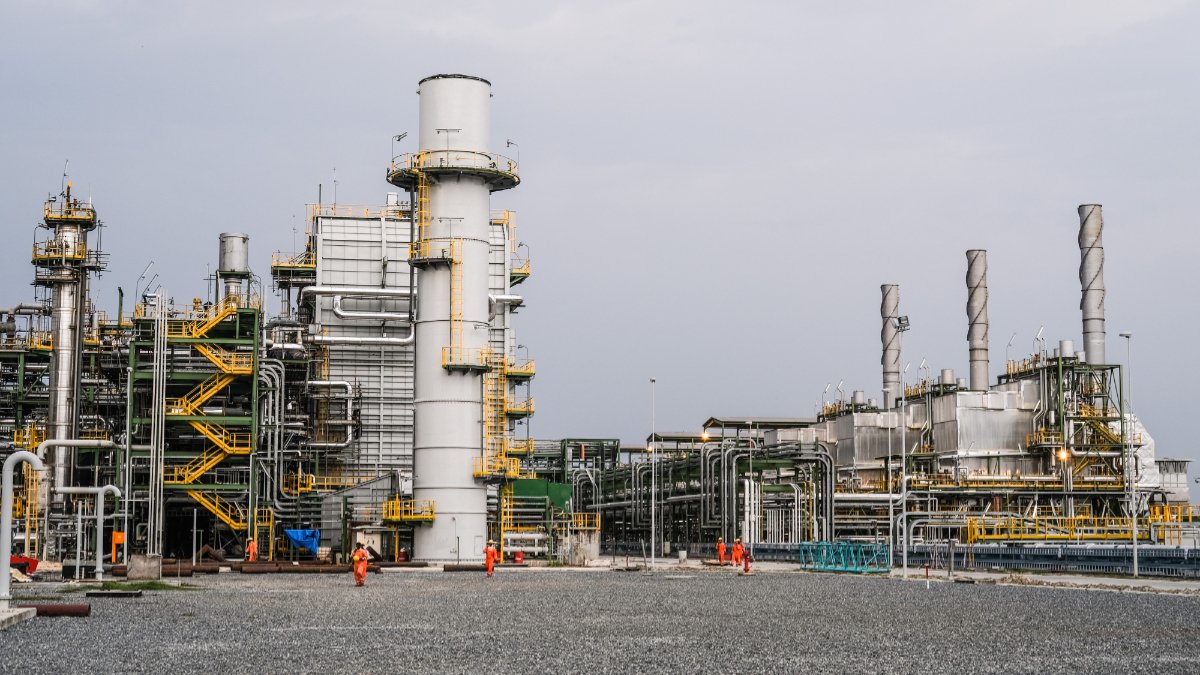
Petrol imports remained Nigeria’s primary source of fuel supply in 2025, accounting for about 62 per cent of total consumption, despite increased output from domestic refineries, including the Dangote Petroleum Refinery, data from the Nigerian Midstream and Downstream Petroleum Regulatory Authority have shown.
According to the NMDPRA’s latest midstream and downstream factsheet, Nigerians consumed about 18.97 billion litres of Premium Motor Spirit in 2025. Oil marketing companies supplied roughly 11.85 billion litres through imports, while domestic refineries contributed about 7.54 billion litres, representing 37.5 per cent of total consumption.
The data indicate that although domestic refining capacity improved steadily during the year, imports continued to dominate supply, largely due to gradual refinery ramp-up, crude supply arrangements, logistics constraints, and demand volatility following the full deregulation of petrol pricing.
The Dangote Petroleum Refinery accounted for virtually all domestic PMS supply, delivering an average of between 17 million and 32 million litres daily and a total of about 7.54 billion litres for the year. This was slightly below its expected annual supply benchmark of 7.2 billion litres. However, domestic output peaked in December, when refinery deliveries rose to 32 million litres per day.
Dangote officials have consistently maintained that the refinery can meet national fuel demand. The Group Chief Branding and Communications Officer of Dangote Industries Limited, Anthony Chiejina, said, “Our refinery is currently loading over 45 million litres of PMS and 25 million litres of diesel daily, which exceeds Nigeria’s demand.”
Some marketers have echoed this position. The National Publicity Secretary of the Independent Petroleum Marketers Association of Nigeria, Chinedu Ukadike, said, “Since Dangote reduced his price, there has been no importation. All the supplies we are getting now are from Dangote.”
However, energy economists caution against declaring an end to petrol imports. Professor Wumi Iledare noted that while domestic supply has improved, imports still play a stabilising role. “Recent claims that petrol importation has ended reflect understandable optimism, but they overstate economic reality,” he said, adding that Nigeria’s downstream market remains anchored on import parity pricing.
Iledare stressed that sustainable energy security depends on market discipline and infrastructure efficiency, not announcements. “The correct policy framing is reduced marginal import dependence, not import elimination. Precision in language matters because credibility in energy policy is built on economic fundamentals, not celebratory headlines,” he said.