

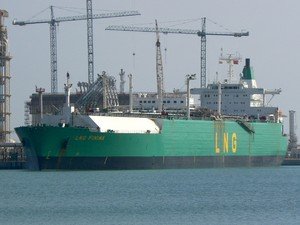
A liquefied natural gas (LNG) shipment from Nigeria has been diverted to Asia following a surge in regional prices, creating a lucrative arbitrage opportunity for traders. The BW Brussels tanker, which loaded at the Nigeria LNG Bonny Island Terminal on February 27, initially signalled a westward course toward Europe but later changed direction, heading south to Asia via the Cape of Good Hope.
Analysts said the move reflects widening price gaps between Asian and European gas markets after supply disruptions from the Middle East.
Asia’s benchmark LNG price, the Japan-Korea Marker, jumped 68.5 per cent to $25.39 per million British thermal units (mmBtu) for April delivery, its highest in three years, while Europe’s northwest spot LNG prices rose to $15.48 per mmBtu.
Market observers note that the difference has created opportunities for flexible cargoes to be redirected eastward, with traders favouring Asian buyers willing to pay a premium. Katayama, a principal analyst at Kpler, explained that the diversion highlights how rapidly global LNG trade flows can respond to price shifts.
The BW Brussels’ route change coincided with increased competition in Asia following production suspensions in Qatar and ongoing geopolitical tensions between the United States and Iran, which have tightened global supply. Analysts say Asian buyers, including India and Petrobangla, are actively seeking alternative LNG sources to replace shortfalls from Qatari exports.
Spot market dynamics suggest that more Nigerian cargoes could be rerouted eastwards if the price spread persists. Qasim Afghan of Spark Commodities noted that the front-month arbitrage opportunities have “increased significantly,” favouring Asian destinations.
Despite the eastward shift, Europe remains a viable market for flexible LNG shipments due to the deep liquidity of the Title Transfer Facility (TTF) in the Netherlands, which allows traders to hedge risks effectively. Nevertheless, Asian demand is expected to dominate short-term cargo allocations.
For Nigeria, the rerouting underscores the influence of global price signals in determining LNG cargo destinations. Analysts warn that producers with flexible shipments will continue to respond to the most profitable markets, highlighting the volatility and opportunistic nature of the global LNG trade.