

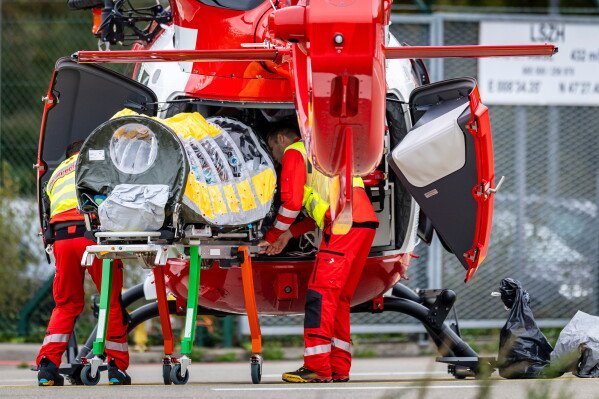
The Federal Government and the World Health Organisation have confirmed the evacuation of Nigeria’s first imported Ebola patient to Switzerland for continued treatment. The 42-year-old Ugandan-born woman was flown out of Abuja on October 26 alongside her husband, who has repeatedly tested negative for the virus.
Coordinating Minister of Health and Social Welfare, Professor Muhammad Ali Pate, said the evacuation followed a formal request by the Swiss Embassy and consultations with public health authorities. He explained that although the patient had improved significantly under treatment by Nigerian doctors, she remained infectious and required continued medical care.
Nigeria Centre for Disease Control and Prevention Director-General, Dr Jide Idris, said the evacuation was approved after considering public health concerns, diplomatic obligations, international regulations and the patient’s rights. He dismissed claims that the patient was secretly removed from Nigeria, adding that infection prevention measures were maintained throughout the transfer.
Meanwhile, health authorities have identified a new suspected case involving an Uber driver who transported the patient to a hospital before her diagnosis. The development increased the number of identified primary contacts from 53 to 54. Idris said three people who developed symptoms during monitoring had tested negative, while more than 40 contacts were quarantined in designated facilities in Abuja.
The WHO warned that Nigeria had not yet been officially declared Ebola-free, despite the index patient’s departure. It said 52 contacts remained under active surveillance and explained that an outbreak can only be declared over after a 42-day monitoring period following the last confirmed case. With the patient evacuated on October 26, December 7 was projected as the earliest possible date for the declaration, provided no new confirmed case emerges.
The NCDC said the government was considering financial assistance for people undergoing compulsory quarantine after some complained that the restrictions affected their businesses and family responsibilities. Idris said authorities had provided accommodation, food and other welfare support. He also urged Nigerians to seek medical attention after possible exposure, warning against unproven herbal remedies and clarifying that Ebola spreads mainly through direct contact with infected blood, body fluids or contaminated materials.
The Inspector-General of Police, Olatunji Disu, has directed officers nationwide to observe infection prevention measures and refer suspected cases to health professionals. The police urged Nigerians to maintain proper hygiene, cooperate with contact-tracing teams, avoid stigmatising patients and healthcare workers, and refrain from spreading unverified information. Members of the public were also advised to report suspected cases to health authorities through the NCDC’s toll-free emergency line, 6232.