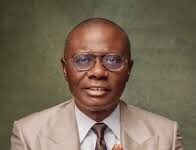


Minister of Works, Dave Umahi, has said the Badagry (Lagos)–Sokoto Superhighway will open up economic opportunities across six states. Speaking yesterday during an inspection of Section Three of the highway, Umahi named the states as Lagos, Oyo, Kwara, Niger, Kebbi, and Sokoto.
The minister described the highway as a strategic corridor that will boost trade, transport, and economic integration between northern and southern Nigeria. Section Three spans 162.35 kilometres, from Agbara in Ogun State to the Ogun–Oyo boundary, and forms part of the larger Sokoto–Badagry Superhighway. Umahi assured Nigerians of the government’s commitment to delivering the project to world-class standards and pledged continued support to contractors for timely and quality completion.
Addressing challenges, engineer Aliu Oyewande highlighted security concerns along greenfield alignments and compensation issues for affected communities. He said stakeholder engagement is ongoing, while construction started in November 2025 and is expected to last 36 months. So far, about 18 kilometres of earthworks and 47 kilometres of site clearance have been completed.
Director of Highways, Musa Saidu, said the road is being built with 200mm reinforced concrete pavement, designed to last up to 100 years, similar to the Lagos–Calabar Coastal Highway. Hitech Managing Director Danny Aboud confirmed that construction across multiple sections is ongoing, with the team committed to completing the project ahead of schedule.
Umahi also updated progress on Phase One of the Lagos–Badagry Highway, noting that the 23-kilometre section is 95 per cent complete. He added that the total rehabilitation of the Third Mainland Bridge cost N43 billion, while the bridge’s CCTV centre was built for about N2.5 billion.
The minister outlined plans for an underground tunnel connecting Victoria Island to Snake Island, which will eventually link the Lagos–Calabar Coastal Highway to the Sokoto–Badagry Superhighway. He reaffirmed President Bola Ahmed Tinubu’s commitment to developing infrastructure across Nigeria.
The Federal Controller of Works in Lagos, Olufemi Dare, described the CCTV centre on the Third Mainland Bridge as Nigeria’s first of its kind, featuring surveillance boats, vehicles, solar panels, inverters, a 300KVA transformer, and standby generators.