

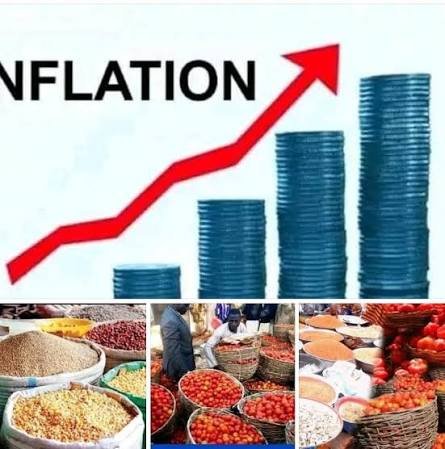
Despite a slight decline in Nigeria’s headline inflation rate in June 2026, inflation remained above 30 per cent in 19 states and the Federal Capital Territory, highlighting persistent cost-of-living pressures across much of the country.
According to the National Bureau of Statistics, headline inflation eased marginally to 15.91 per cent in June from 15.93 per cent in May. However, state-level data revealed that more than half of Nigeria’s sub-national entities continued to experience significantly higher inflation rates than the national average.
Niger recorded the country’s highest annual inflation at 42.23 per cent, followed by Kogi at 41.59 per cent and the FCT at 39.91 per cent. Other states exceeding the 30 per cent threshold included Kwara, Plateau, Sokoto, Benue, Lagos, Oyo and Akwa Ibom, among others.
At the lower end of the ranking, Imo posted the lowest annual inflation rate at 19.47 per cent, followed by Ebonyi and Katsina. Even so, Imo’s figure remained higher than the national headline inflation rate, underscoring the disparity between national and state-level price movements.
Food inflation remained a major concern across the country. Kogi recorded the highest annual food inflation at 53.02 per cent, while Niger and Benue also posted food inflation above 40 per cent. The NBS attributed rising food prices to increases in the cost of staples including tomatoes, pepper, beef, garri, yam, cassava flour and cowpea.
Monthly inflation trends also varied widely across states. Niger recorded the highest month-on-month inflation increase, while Bayelsa, Benue and Cross River experienced the sharpest monthly declines in headline inflation. Food inflation followed a similar pattern, with Katsina recording the largest monthly increase.
The Chief Executive Officer of the Centre for the Promotion of Private Enterprise, Dr. Muda Yusuf, described the overall inflation outlook as relatively stable but warned that renewed increases in food prices remain the biggest threat to household welfare and purchasing power.
Yusuf argued that Nigeria’s inflation challenge is driven more by structural issues than monetary factors. He called for reforms that improve food production, strengthen logistics, reduce energy and transportation costs, expand domestic refining capacity and boost productivity rather than further tightening of monetary policy by the Central Bank.