
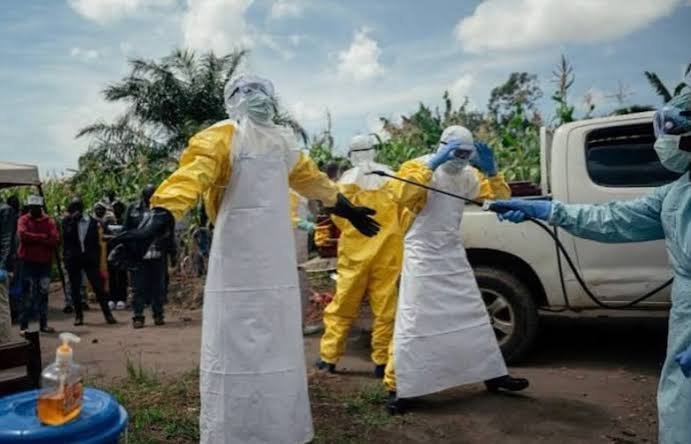
The Federal Government has activated emergency measures to contain Nigeria’s confirmed Ebola case, assuring citizens that the country has the expertise and facilities to prevent further spread. The Chairman of the Presidential Task Force on Ebola Preparedness, Femi Gbajabiamila, urged Nigerians to remain calm and cooperate with health authorities.
Gbajabiamila said the infected woman arrived in Abuja without symptoms but developed signs of the disease four days later. He explained that surveillance and screening protocols enabled authorities to identify the case quickly. According to the government, about 44,000 flights have operated into and out of Nigeria since June, with relevant agencies monitoring potential health threats.
Coordinating Minister of Health and Social Welfare, Prof. Muhammad Ali Pate, said the government was working with Uganda, the World Health Organisation and the Africa Centres for Disease Control and Prevention to contain the outbreak. He added that contact tracing was ongoing, hospitals had been placed on alert, and emergency response plans were being strengthened nationwide.
An official of the Nigeria Centre for Disease Control and Prevention reportedly said three rounds of molecular tests confirmed that the patient was infected with the Bundibugyo strain of Ebola. The patient, identified in reports as a diplomat with recent travel history to East Africa, was receiving treatment in isolation at a private health facility in the Federal Capital Territory. Authorities reported that she had developed multiple organ failure, although Pate said she was stable at the time of his statement.
Meanwhile, the Minister of Aviation and Aerospace Development, Festus Keyamo, directed aviation authorities to place 46 people linked to the case on a no-fly list for at least 21 days. The group comprises 44 people who had contact with the patient at the hospital after she developed symptoms and two members of her domestic staff. Keyamo also ordered increased surveillance at international airports and instructed the NCAA to notify airlines of the restrictions.
The Senate and House of Representatives have called for emergency funding and stronger surveillance to prevent further infections. The Senate urged the government to release funds through the Service-Wide Vote rather than wait for the 2027 budget, while lawmakers proposed stricter screening of international arrivals, including health declarations, temperature checks and travel-history assessments. The House also called for the release of outstanding funds to relevant health institutions and directed its committee on infectious diseases to monitor preparedness.
The WHO said it was supporting Nigerian authorities with investigations, contact tracing, infection prevention and essential supplies, including protective equipment for health workers. It advised against travel and trade restrictions on affected countries and urged regional governments to maintain surveillance and laboratory readiness. Meanwhile, Pate and other officials cautioned Nigerians against spreading unverified information, stressing that public cooperation and accurate communication were essential to containing the outbreak.