
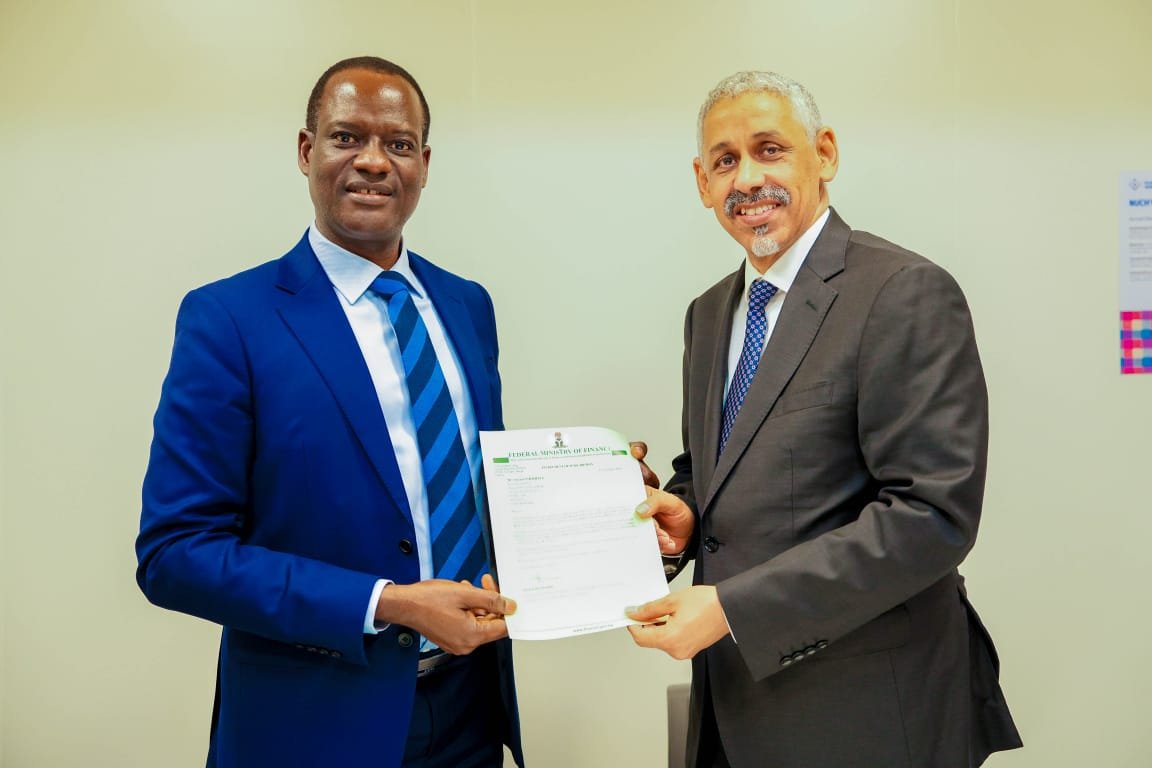
Nigeria has pledged to retain its position as the African Development Bank’s largest shareholder and meet its financial obligations to the institution. The commitment was made by the Minister of Finance and Coordinating Minister of the Economy, Taiwo Oyedele, during a meeting with AfDB President, Dr Sidi Ould Tah, in Bangkok, Thailand.
The meeting took place on the sidelines of the 2026 International Monetary Fund and World Bank Group Annual Meetings. According to a statement from the Federal Ministry of Finance, Oyedele reaffirmed Nigeria’s support for the AfDB’s Four Cardinal Points, a strategic agenda aimed at addressing Africa’s major economic and development challenges.
Both parties agreed to conduct a joint technical review of the bank’s project portfolio in Nigeria to identify implementation challenges, accelerate project completion and align ongoing operations with the Federal Government’s development priorities. The AfDB president is also expected to visit Nigeria to meet President Bola Tinubu, government officials and other stakeholders.
Oyedele said Nigeria’s partnership with the bank should deliver increased development financing and tangible economic benefits. He also expressed concern that international credit ratings sometimes fail to reflect improvements in economic conditions and government reforms, potentially raising borrowing costs and making development projects more expensive to finance.
In response, Ould Tah said the AfDB was developing a facility to provide African governments with technical and analytical support in their engagement with international credit rating agencies. The initiative is expected to help countries present reliable economic data, explain the impact of reforms and challenge assessments they consider inconsistent with available evidence.
The two officials also discussed strengthening financial integration across Africa, expanding the use of local currencies in cross-border transactions and using trade insurance and credit enhancement to reduce investment risks. These measures are intended to encourage private-sector investment and complement public funding for infrastructure, industrial development and trade.
The discussions further addressed the need to retain skilled professionals within Africa, as the loss of experienced workers can weaken institutions and limit economic development. The AfDB’s Four Cardinal Points focus on closing Africa’s financing gap, strengthening control over financial resources, harnessing the continent’s growing population and developing resilient infrastructure through local processing of natural resources.