

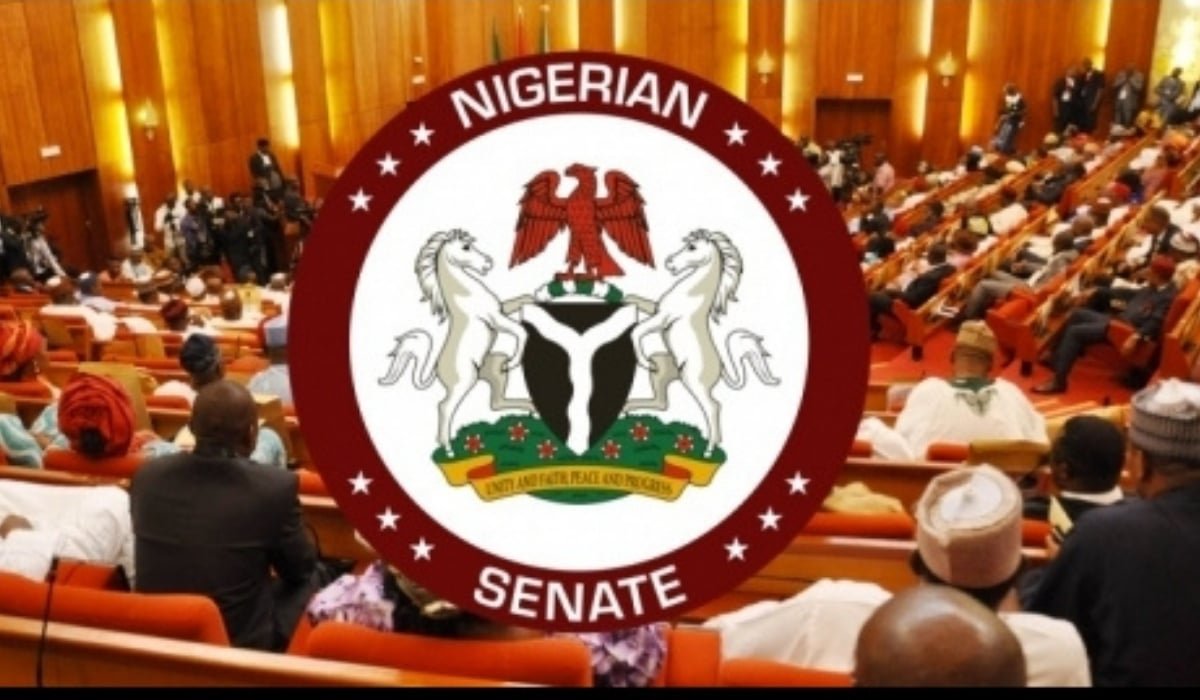
The Senate on Wednesday passed the Constitution of the Federal Republic of Nigeria (Alteration) (State Police) Bill, 2026, advancing a major security reform that seeks to decentralise policing and strengthen crime-fighting efforts across the country.
The executive bill, transmitted by President Bola Tinubu and read for the first time on Tuesday, scaled legislative scrutiny after extensive debate by lawmakers, who described it as a necessary response to Nigeria’s worsening security challenges.
Leading the debate, Senate Leader Opeyemi Bamidele described the proposal as one of the most significant constitutional reforms since Nigeria returned to democratic rule in 1999. He said the bill provides a framework for the establishment of state police services while empowering the National Assembly to prescribe minimum standards for recruitment, training, promotions, discipline, complaints procedures and professional conduct.
Bamidele said the legislation contains safeguards to prevent political abuse by state governments, noting that governors would be prohibited from deploying state police for partisan, ethnic, religious or personal interests. He added that any federal intervention in state policing matters must be authorised in writing by the President, subjected to Senate oversight and remain open to judicial review.
Several lawmakers supported the bill, including Senator Enyinnaya Abaribe, who said he had previously opposed state police but had reconsidered his position due to the country’s deteriorating security situation. Senator Aminu Waziri Tambuwal and Chief Whip Tahir Monguno also backed the proposal, arguing that decentralised policing would improve security response and deepen federalism.
The Senate also passed a separate bill increasing allocations to the Nigeria Police Trust Fund from the Consolidated Revenue Fund from 0.5 per cent to one per cent to enhance funding for law enforcement agencies. The deliberations were witnessed by senior government officials, including Attorney-General of the Federation Lateef Fagbemi, Chief of Staff to the President Femi Gbajabiamila and Governors Uba Sani of Kaduna, Dapo Abiodun of Ogun and Lucky Aiyedatiwa of Ondo.
With concurrence from the House of Representatives, the state police bill will now be transmitted to the 36 state Houses of Assembly, where it must secure approval from at least two-thirds of the legislatures before it can be presented to President Tinubu for assent. Lagos State Governor Babajide Sanwo-Olu welcomed the Senate’s decision, describing it as an “epochal” development and urged state assemblies nationwide to support the constitutional amendment.