
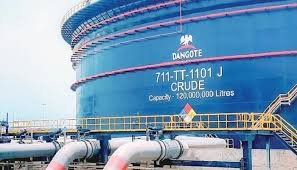
An official of S&P Global Energy, Matthew Tracey-Cook, says Nigerian fuel marketers are increasingly importing petroleum products refined by the Dangote Refinery through the offshore ship-to-ship trading hub in Lomé, Togo, despite growing local production.
Speaking at a MEMAN webinar on West African fuel markets, Tracey-Cook explained that Dangote-origin products accounted for more than 70 to 80 per cent of waterborne fuel imports into Nigeria between March and May 2026, with volumes often shipped first to Lomé before being re-imported into Lagos and other Nigerian ports.
He described Lomé as an important transshipment hub that allows larger tankers to discharge cargoes onto smaller vessels suitable for many West African ports that lack the capacity to receive fully loaded medium-range ships.
According to S&P Global data, Dangote products now dominate waterborne deliveries into Nigeria, while the Lomé hub remains slightly larger than it was in 2024 and continues to handle substantial volumes of petrol, diesel, jet fuel and other refined products.
Tracey-Cook noted that Dangote’s petrol prices remain closely linked to Lomé benchmarks, adding that the two locations have emerged as the most important supply hubs for refined products in West Africa.
He also said the Middle East conflict has increased Dangote Refinery’s significance in global fuel supply, particularly for jet fuel, revealing that the refinery became the world’s largest exporter of jet fuel in May 2026.
The development comes months after Nigerian marketers alleged that Dangote sold petrol to international traders at prices lower than those offered to local buyers, a claim the refinery denied.