
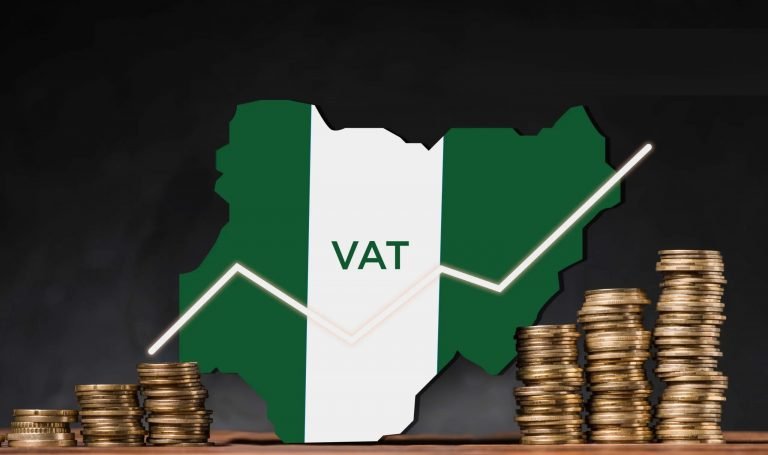
Value Added Tax collections rose sharply to N1.08tn in January 2026, marking the first full month under a revised sharing formula that significantly alters how proceeds are distributed among the Federal Government, states and Local Governments.
Documents presented at the February meeting of the Federation Accounts Allocation Committee showed that VAT collections increased from N913.96bn in December 2025 to N1.08tn in January, a month-on-month rise of N169.20bn or 18.5 per cent. After deductions at source, net VAT available for distribution stood at N1.00tn, compared with N846.51bn shared in December.
Under the new formula, the Federal Government now receives 10 per cent of net VAT, states 55 per cent and Local Governments 35 per cent. Previously, the Federal Government received 15 per cent while states got 50 per cent. As a result, the Federal Government’s share dropped to N100.32bn in January from what would have been about N150.48bn under the old formula, while states benefited from a higher allocation of N551.77bn.
Local Governments received N351.13bn in January, up from N296.28bn in December. Overall, total funds available for distribution across revenue lines in January stood at N3.04tn, with N1.90tn net distributable after deductions.
Lagos remained the largest beneficiary of VAT allocation, with a gross share of N111.22bn and a net state allocation of N101.34bn after deductions. Oyo, Rivers, Kano and the Federal Capital Territory also ranked among the top recipients, reflecting disparities driven by economic activity, population and derivation factors.
Non-import local VAT collections showed heavy concentration in a few states. Lagos alone generated N533.40bn in January, accounting for over 58 per cent of total non-import VAT, followed by Oyo, Rivers and the FCT.
While higher collections have boosted allocations to subnational governments, economic analysts urged states to strengthen internal revenue generation and ensure transparency in the use of increased funds. They noted that VAT has historically not been a primary revenue source for the Federal Government and cautioned states against overreliance on statutory allocations.
The International Monetary Fund and local policy experts have also warned that maintaining the current VAT rate without increases could result in revenue shortfalls, even as reforms to modernise the tax system continue. However, officials argue that delaying a rate hike is justified amid concerns over poverty and food insecurity.