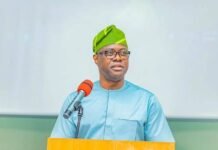

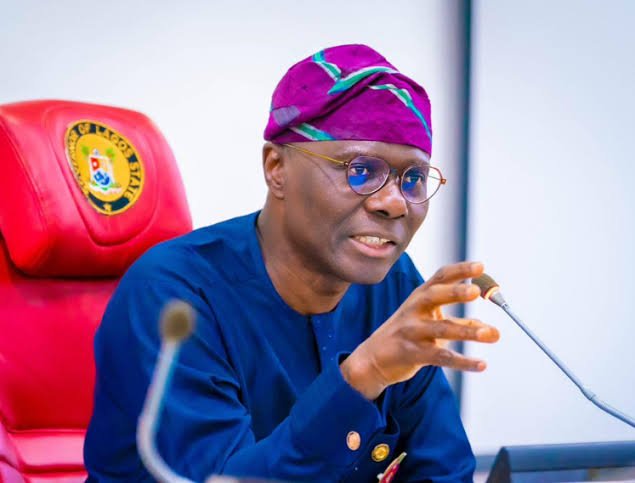
Lagos State Governor Babajide Sanwo-Olu has described food security as a critical part of national security, saying his administration is working to increase the state’s food self-sufficiency level from 20 to 40 per cent.
Speaking at the Lagos Food Systems Nexus 2026, the governor said the state was implementing a five-year Agricultural and Food Systems Roadmap, supported by a ₦500bn food offtake guarantee fund and investments in production, processing, storage and logistics.
Sanwo-Olu said governments must ensure food is available and affordable, adding that food security requires cooperation among public institutions, financial organisations, private investors, farmers, processors and distributors. He also urged young people to explore opportunities across the food value chain.
The Commissioner for Agriculture and Food Systems, Abisola Olusanya, said the state was broadening its approach to agriculture to include technology, processing, transportation, marketing and distribution. She noted that increased production alone would not solve food insecurity without improvements in storage, logistics and market access.
Stanbic IBTC Bank Managing Director, Wole Adeniyi, estimated Lagos’ food economy at $16.4bn annually, noting that more than 70 per cent of the food consumed in the state comes from other parts of Nigeria. He identified opportunities for investment in storage, processing, aggregation and distribution, and said post-harvest inefficiencies cost Nigeria an estimated ₦3.5tn annually.
Founder of Origin Tech Group, Prince Samuel Joseph Samuel, said the Lagos Food Logistics Hub, developed in partnership with the state government, was designed to reduce food waste, stabilise prices and lower food costs by between 20 and 30 per cent. He disclosed that the project was nearing commissioning, with storage facilities including 40,000 pallet positions and a silo system designed for up to 500,000 metric tonnes.
Samuel also disclosed plans for a dairy processing plant with an annual capacity of 30 million litres and a herd of 6,000 cows within 24 months. He said the first 1,000 cows had begun arriving, while an associated food transport initiative, Ekolog, had deployed 450 trucks to improve produce distribution. Stakeholders at the event stressed that stronger infrastructure, private investment and partnerships across the food value chain would be essential to improving food security in Lagos.