
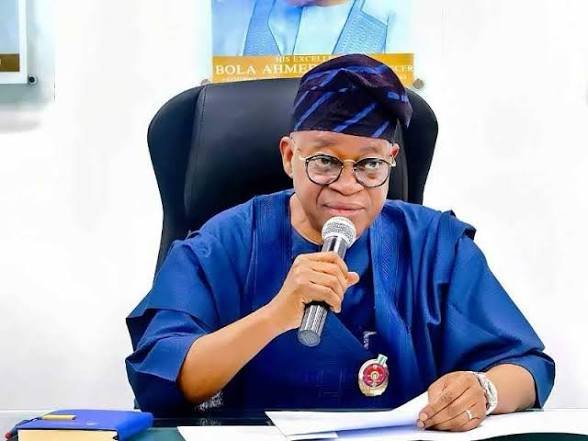
The Minister of Marine and Blue Economy, Adegboyega Oyetola, says Nigeria’s maritime sector has undergone significant transformation since President Bola Tinubu established the Federal Ministry of Marine and Blue Economy in August 2023.
Oyetola said the ministry had focused on unlocking the economic potential of Nigeria’s 853-kilometre coastline and inland waterways, with reforms targeting revenue generation, trade, security, investment and job creation. He said agencies under the ministry generated N1.83tn in 2025, up 160 per cent from N700.79bn in 2023, attributing the increase to regulatory reforms, digitisation, revenue assurance and efforts to close financial leakages.
The minister also highlighted the approval of Nigeria’s first National Policy on Marine and Blue Economy in May 2025. He said the policy created a unified framework for shipping, fisheries, offshore energy, marine biotechnology and other emerging sectors, providing greater predictability for investors while promoting sustainable use of marine resources.
Port modernisation has also been a major focus, with upgrades underway at Apapa, Tin Can Island, Onne, Rivers, Calabar and Warri ports. Oyetola said the reforms include deeper channels, improved cargo-handling infrastructure and digitalised operations. The World Bank and S&P Global Market Intelligence ranked Tin Can Island Port 10th and Lagos Port Complex, Apapa, 12th among the world’s 20 most improved container ports between 2020 and 2025.
Oyetola said the government had also tackled the longstanding Apapa port gridlock through electronic truck call-up, holding bays and expanded inland barging. He added that Nigeria had recorded zero piracy in its territorial waters for four consecutive years, while the country regained its seat on the International Maritime Organization’s Category C Council in November 2025 after 14 years and secured the lifting of US Coast Guard entry restrictions on vessels arriving from Nigerian ports.
Beyond existing ports, the ministry is advancing deep-seaport projects across Akwa Ibom, Cross River, Bayelsa, Ondo, Lagos and Rivers states, while inland dry ports are extending cargo-clearance services into the hinterland. Oyetola also said the new Nigeria Ports Economic Regulatory Authority Act had helped save port users more than N86bn in disputed demurrage and resolve nearly 300 commercial disputes through alternative dispute resolution.
The minister said the government was also working to strengthen indigenous participation through plans to revive a national shipping carrier under a public-private partnership and begin disbursement of the Cabotage Vessel Financing Fund. Other reported gains include increased seafarer earnings, higher fish production at 1.4 million metric tonnes in 2025, improved inland-waterway safety and progress towards replacing unsafe wooden boats with fibreglass vessels. Oyetola said the reforms were positioning the blue economy as an increasingly important source of national prosperity and sustainable growth.