

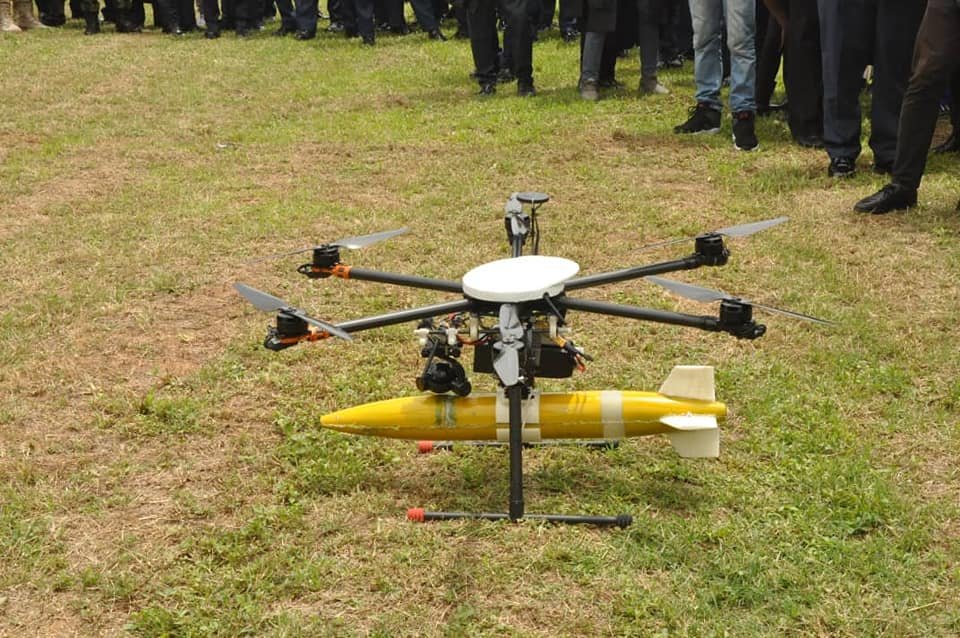
Nigeria is intensifying efforts to develop its indigenous defence industry by establishing local production lines for armoured vehicles, anti-drone systems and other specialised military equipment.
The initiative is being driven by the Defence Industries Corporation of Nigeria-D7G in partnership with Eagles International for Defence Systems. The partnership aims to facilitate technology transfer, expand domestic manufacturing capacity and reduce Nigeria’s dependence on imported military hardware.
DICON-D7G Chief Executive Officer Osman Chennar said the partnership would create more than 200 jobs and provide opportunities for about 100 retired military personnel. He added that technology transfer would enable Nigeria to manufacture more military platforms for its armed forces and potentially other African countries.
The targeted equipment includes armoured multi-purpose vehicles, personnel carriers, mortar launcher cabins, medical evacuation and ambulance cabins, as well as several MRAP and anti-drone vehicles. The initiative follows a two-day inspection of defence production facilities in Cairo, Egypt, by Minister of State for Defence Bello Matawalle and his delegation.
Chennar said the project formed part of a broader plan to establish a sustainable Nigerian defence manufacturing ecosystem capable of designing, assembling and producing military equipment locally. The Nigerian Army is already receiving locally manufactured armoured vehicles as part of efforts to strengthen its operational capacity.
Beyond manufacturing, DICON-D7G is developing a dedicated military jetty in Lagos to facilitate the movement of raw materials, components and finished military equipment. The facility is expected to serve as a logistics hub for distributing defence equipment within Nigeria and across Africa.
The military jetty is expected to launch within two to three months, with Chennar projecting employment for more than 200 retired military personnel and over 1,000 civilians. The broader strategy is expected to retain defence spending within Nigeria, build specialised technical skills, reduce reliance on foreign suppliers and position the country as a potential defence manufacturing hub in Africa.
###