

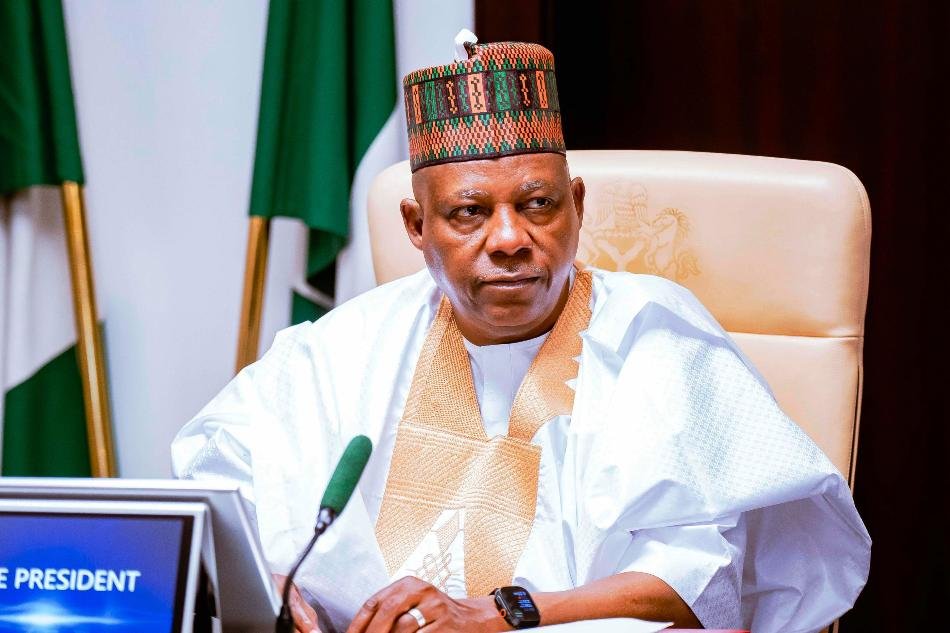
Vice President Kashim Shettima has urged state governments to stop relying solely on the Federal Government to solve electricity problems and establish functional power markets under the Electricity Act 2023. He spoke on Wednesday at the National Stakeholders’ Workshop on the Act at the State House Banquet Hall in Abuja.
In a speech delivered by Deputy Chief of Staff to the President, Ibrahim Hadejia, Shettima said reliable electricity was essential to building a competitive industrial economy. He noted that the law allows states to develop and regulate electricity markets within their territories, creating opportunities to improve power supply according to local needs and resources.
The Vice President urged states to exploit their energy resources, including solar power in Sokoto, Borno and Katsina, gas in Delta, Rivers and Bayelsa, and hydroelectric potential in Niger and Kebbi. He said these resources could support agriculture, manufacturing, healthcare and education if converted into viable investments.
Shettima warned that passing legislation alone would not improve electricity supply. He called on states that had yet to establish electricity regulators to begin the necessary legislative and institutional preparations and develop agencies with the technical expertise to oversee their markets.
He also proposed a voluntary National Electricity Reform Peer Review and Implementation Framework involving the Nigerian Electricity Regulatory Commission, the Federal Ministry of Power, the Nigeria Governors’ Forum and state regulators. The initiative would enable states to share experiences, assess progress, identify implementation challenges and improve investment readiness, consumer protection and electricity access.
The Vice President said private investment would be necessary to finance the sector’s transformation, urging governments to provide transparent licensing, predictable regulations and effective dispute resolution.
He also called for stronger consumer protection against arbitrary billing, poor service and unfair commercial practices. Meanwhile, the Director-General of the Nigeria Governors’ Forum, Abdulateef Shittu, said work was ongoing on a standard tariff framework for states.
The Electricity Act 2023, signed by President Bola Tinubu in June 2023, allows states to license electricity generation, transmission and distribution within their borders, while the national regulator retains oversight of interstate matters.
The Electricity Commission said regulatory responsibilities had been transferred to 17 states, with Akwa Ibom the latest. However, electricity generation companies reported outstanding debts of about N6.8tn at the end of February, while national power output had remained around 4,000 megawatts for years despite an installed capacity of approximately 14,000 megawatts.