

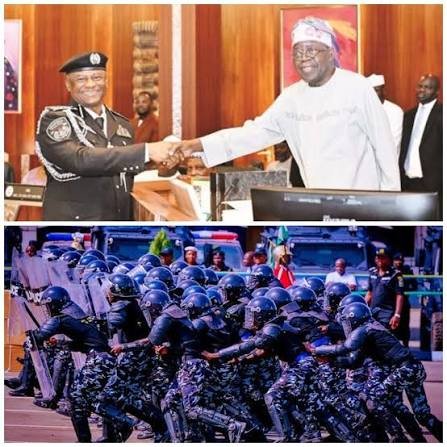
The Presidency has announced that public submissions on the proposed National Policing Bill will close by 5pm on Thursday, August 13, 2026.
Chief of Staff to the President and Chairman of the Presidential Working Group on the Bill, Femi Gbajabiamila, urged Nigerians to submit their views on the proposed establishment of state police.
Gbajabiamila said the consultation was intended to incorporate Nigerians’ experiences and professional expertise into the legislation, particularly on political interference, police misconduct, oversight and intelligence-sharing between federal and state police services.
He acknowledged that state police could bring policing closer to communities and improve responses to local security challenges, but warned that safeguards must prevent governors from using state police against political opponents, protesters, journalists, minority groups and other citizens.
The proposed framework, he said, should provide strong recruitment, training and supervision standards, alongside credible complaint and oversight mechanisms. It should also ensure that police officers operate within the Constitution, human rights protections and the rule of law, while making misconduct easier to investigate and political interference harder to conceal.
Gbajabiamila explained that constitutional amendment is required because Section 214 of the Constitution currently provides for the Nigeria Police Force as the country’s police service. Although both chambers of the National Assembly have approved proposed amendments creating Federal Police Service and State Police Services, the process is not yet complete.
He said the National Policing Bill would establish national standards covering recruitment, vetting, training, remuneration, pensions, equipment, professional conduct, use of force, complaints, discipline, independent oversight and intelligence-sharing. However, state police would not automatically be established nationwide even if the constitutional amendment and Bill become law.
Each state would still need to choose whether to establish its own police service, pass enabling legislation, create the necessary institutions, provide funding and meet national operational requirements. States that do not establish their own police services would continue to be served by the Nigeria Police Force.