
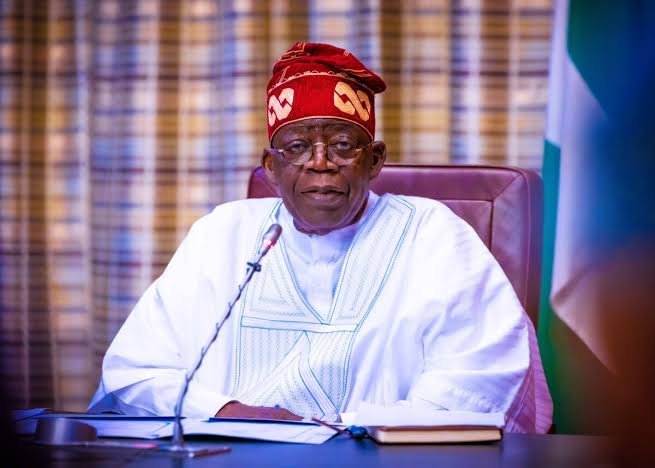
President Bola Tinubu’s administration has secured $11.4bn in World Bank loan approvals in just three years, placing it on track to overtake the $14.59bn approved during former President Muhammadu Buhari’s eight years in office, according to an analysis of World Bank data.
Since assuming office in May 2023, Tinubu has obtained nearly 78 per cent of the financing approved under Buhari’s administration. At the current pace, the government would need about $3.2bn in additional approvals to surpass that record.
Despite the rapid pace of approvals, project implementation remains at an early stage. Of the $11.4bn approved, only $2.32bn, or about 20 per cent, has been disbursed, compared with an 81.8 per cent disbursement rate for projects approved under Buhari.
The loans are spread across key sectors including economic reforms, agriculture, education, healthcare, power, digital infrastructure, financial inclusion and social protection. Among the largest approvals is a $2.25bn package to support Nigeria’s economic reform programme, alongside financing for renewable energy, agricultural value chains, healthcare, education, and broadband expansion.
Recent approvals also include $1.25bn under the Nigeria Actions for Investment and Jobs Acceleration programme, which forms part of the World Bank’s 2026–2032 Country Partnership Framework aimed at supporting private sector-led growth, job creation and infrastructure development.
The borrowing comes as Nigeria’s debt to the World Bank climbed to $19.89bn at the end of 2025, accounting for about 38 per cent of the country’s total external debt stock, according to the Debt Management Office.
Economists remain divided over the government’s borrowing strategy. Development economist Aliyu Ilias argued that rising debt servicing costs are crowding out capital expenditure and worsening fiscal pressures despite higher government revenues. On the other hand, Adewale Abimbola said concessional loans from multilateral lenders such as the World Bank are beneficial if invested in projects capable of generating long-term economic returns.
Defending the government’s position, the Minister of Finance and Coordinating Minister of the Economy, Wale Edun, maintained that the focus should not be on the size of Nigeria’s debt but on whether borrowed funds are financing productive investments capable of generating returns that exceed their cost.