

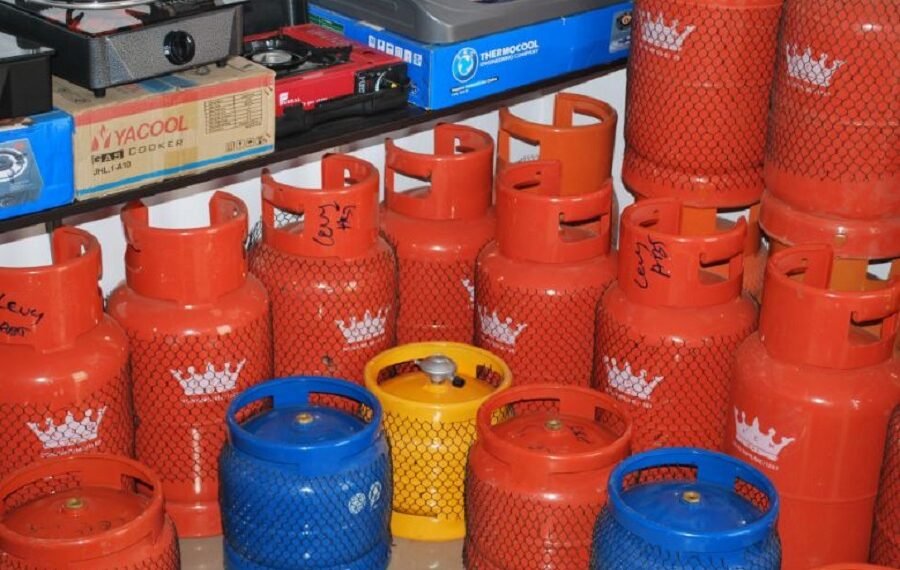
Cooking gas prices have continued to rise across Nigeria despite a steady increase in domestic production and a sharp decline in imports, according to industry data, deepening concerns over affordability for households.
Figures from the Nigerian Midstream and Downstream Petroleum Regulatory Authority (NMDPRA) show that local Liquefied Petroleum Gas (LPG) production from refineries and gas processing plants now accounts for the bulk of national supply. Between April 2025 and April 2026, domestic output consistently outweighed imports.
However, the increase in supply has not translated into relief for consumers, with prices rising sharply across the country. In some locations, cooking gas now sells for as high as ₦2,000 per kilogramme.
Data indicates that average daily LPG supply ranged between 3,300 and 4,500 tonnes within the review period. By March and April 2026, domestic supply had risen to about 4,500 tonnes per day, further consolidating local dominance in the market.
In contrast, imports declined significantly, dropping to about 200 tonnes per day in March 2026 from between 1,500 and 1,600 tonnes in late 2025. Despite this shift, retail prices have continued to climb rather than ease.
Market checks show that cooking gas, which sold for below ₦1,000 per kilogramme in many areas just months ago, now averages around ₦2,000 depending on location, worsening the cost-of-living burden on households.
Marketers attribute the persistent increase to supply chain bottlenecks, distribution inefficiencies and scarcity in some neighbourhoods, noting that availability does not necessarily reflect affordability at the retail end.
Stakeholders warn that unless structural issues in distribution are addressed, rising domestic production alone may not be sufficient to stabilise prices or reduce pressure on consumers, even as major gas infrastructure projects near completion.