
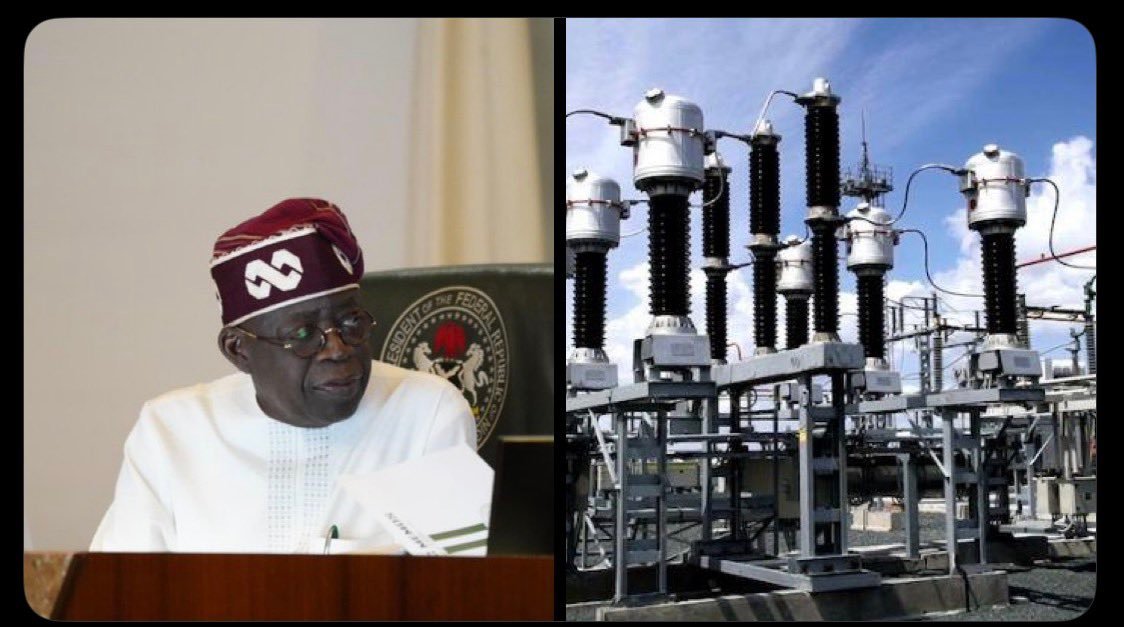
President Bola Ahmed Tinubu has approved a N3.3 trillion payment plan aimed at settling longstanding debts in Nigeria’s power sector, in a move to improve electricity supply across the country.
The decision comes amid persistent power outages linked to declining electricity generation, largely caused by inadequate gas supply to thermal plants.
According to a statement by the President’s Special Adviser on Information and Strategy, Bayo Onanuga, the payment plan followed a comprehensive review of legacy debts accumulated between February 2015 and March 2025.
The government said the N3.3 trillion figure represents a full and final settlement of the obligations, adding that implementation has already begun, with 15 power plants signing agreements covering N2.3 trillion.
It noted that the Federal Government had earlier raised N501 billion to support the settlement, with N223 billion already disbursed and additional payments ongoing.
The debt resolution is part of the Presidential Power Sector Financial Reforms Programme, which aims to stabilise the electricity value chain and improve overall efficiency.
Special Adviser on Energy to the President, Olu Arowolo-Verheijen, said clearing the debts would restore confidence in the sector, ensure gas suppliers are paid, and enable power plants to operate more reliably.
She added that the move would have broader economic benefits, including increased investment, improved productivity, and job creation.
According to industry data, Nigeria’s power generation averaged about 4,300 megawatts between February and March 2026, significantly below the country’s installed capacity of over 13,000 megawatts and estimated demand of more than 20,000 megawatts.
The shortfall has been attributed to gas supply constraints, which have forced several power plants to shut down or operate below capacity, prompting nationwide load shedding to prevent grid collapse.
Chief Executive Officer of the Centre for the Promotion of Private Enterprise, Muda Yusuf, described the initiative as a bold and commendable step, noting that improved liquidity in the sector would likely boost electricity generation and transmission.
However, the Chief Executive Officer of the Association of Power Generation Companies, Joy Ogaji, raised concerns over the reduction of the agreed debt figure from N4 trillion to N3.3 trillion, stating that the basis for the new figure remains unclear.
Despite this, stakeholders emphasised the need for continued reforms to ensure long-term stability and efficiency in the power sector.