
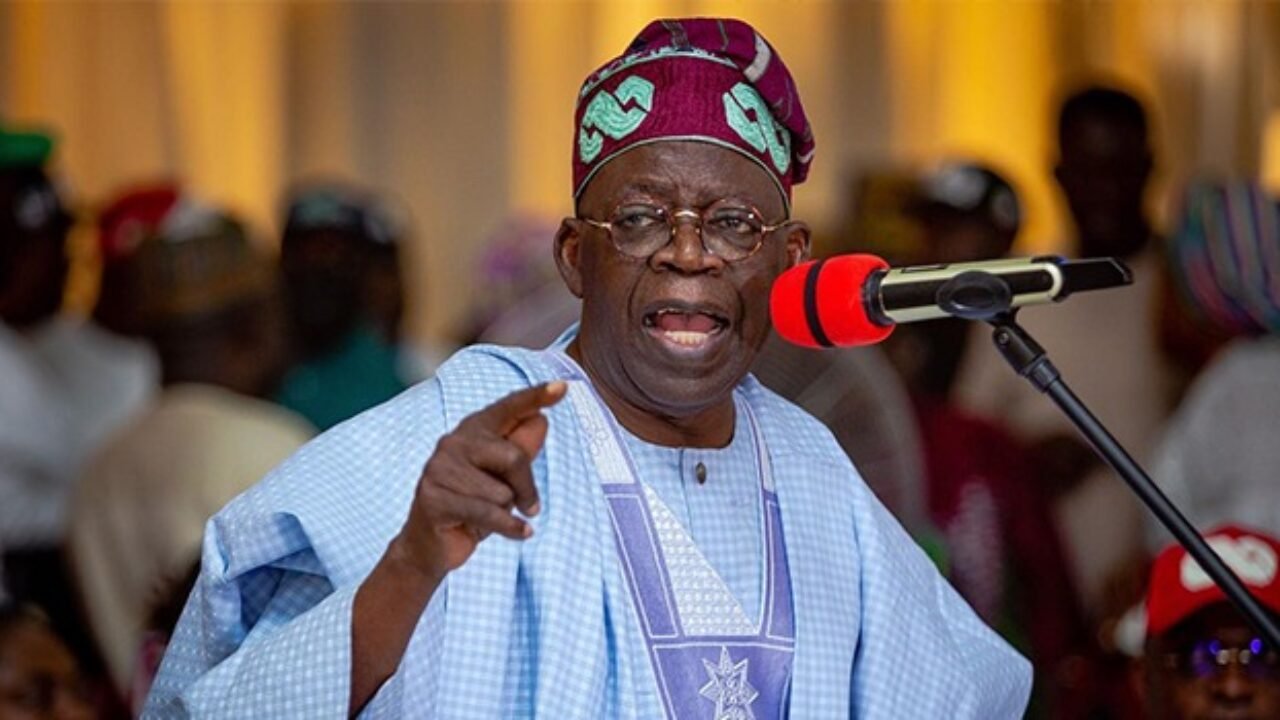
President Bola Ahmed Tinubu has challenged governors, ministers and heads of government institutions to ensure that policy decisions translate into measurable improvements in the lives of Nigerians.
Speaking at the close of the two-day National Economic Council (NEC) Conference in Abuja, the President said his administration’s Renewed Hope Agenda would be judged not by speeches or resolutions, but by tangible outcomes reflected in job creation, improved infrastructure, stronger schools, better healthcare and renewed investor confidence. He was represented by Senate President Godswill Akpabio.
Tinubu cautioned against allowing the conference to end as another high-level engagement without concrete impact. “Reform is not an event; it is a process. It requires courage, patience and consistency,” he said, stressing that implementation across all tiers of government would determine the country’s development trajectory.
He described the Renewed Hope Agenda as a national commitment that demands movement “from dialogue to delivery,” adding that only disciplined execution of agreed policies would build a resilient economy and inclusive society.
The conference, themed “Delivering Inclusive Growth and Sustainable National Development: The Renewed Hope National Development Plan,” produced recommendations on taxation, crude oil theft, security, social investment and constitutional reforms. In a communiqué read by the Permanent Secretary of the Federal Ministry of Budget and Economic Planning, Dr Deborah Odoh, participants called for the expansion of the NEC committee’s mandate on crude oil theft to address persistent revenue losses.
On tax reform, the conference commended 12 states that have passed the harmonised tax law, urged 13 states with pending bills to accelerate legislative action, and encouraged the remaining states to commence the process to reduce multiple taxation. It also emphasised urgent investment in education, healthcare and nutrition, noting continued underinvestment in human capital.
Security featured prominently in discussions, with participants agreeing that military action alone would not resolve Nigeria’s challenges. The communiqué recommended a blend of kinetic and non-kinetic strategies, including tackling unemployment and poverty, improving intelligence sharing and strengthening coordination among security agencies and state governments.
Lagos State Governor Babajide Sanwo-Olu said the conference outcomes must extend beyond government circles to the organised private sector and the National Assembly. Ogun State Governor Dapo Abiodun described the administration’s macroeconomic reforms as restoring confidence in the foreign exchange market, arguing that past forex interventions caused deeper distortions than fuel subsidy. He maintained that policy credibility, security and decentralisation of the power sector would be key to sustaining investor interest.
At a security-focused session, Minister of Defence Gen. Christopher Musa said sustainable security requires intelligence fusion, coordination and technology working alongside governance and development. Inspector-General of Police Kayode Egbetokun, represented by DIG Frank Mba, added that modern crime patterns demand unified national action built on collaboration rather than inter-agency rivalry.