
The Independent National Electoral Commission has revealed that there are challenges in three critical areas ahead of the 2027 elections.
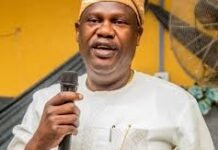
The electoral umpire Chairman Prof. Joash Amupitan (SAN) listed them as poor communication infrastructure, voter apathy and misinformation/low civic engagement.
He spoke at a stakeholders’ meeting organised by the Nigeria Civil Society Situation Room in Abuja.
Amupitan described the country’s weak telecommunications network as one of INEC’s toughest battles.
He noted that the Bimodal Voter Accreditation System (BVAS) and the INEC Result Viewing Portal (IReV) can only function effectively where network coverage is reliable.
The INEC Chairman said despite the Commission’s advances in electoral technology, several structural and systemic challenges continue to threaten credible polls.
He said: “With over 176,000 Polling Units, some in remote areas, achieving real-time upload of results to IReV remains one of our biggest operational obstacles.
“A tool like the BVAS is only as good as the network it runs on.”
He added that the Commission is deepening engagement with the Nigerian Communications Commission (NCC) and network providers while “actively exploring alternative technologies and building system redundancy to bridge these gaps.”
The INEC Chairman reaffirmed that technology has “fundamentally redefined” Nigeria’s elections.
The INEC Chairman highlighted low voter turnout as another critical threat to the credibility of the 2027 elections.
He said the 27 per cent turnout recorded in the 2023 general elections should concern all stakeholders.
“This is a stark reminder that apathy cannot be solved by technology alone,” he said.
He cited Anambra State’s recent off-cycle election as a breakthrough in mobilisation.
Concern over vote-buying, inducement
Amupitan also expressed concern over the escalating influence of money in elections.
He warned that vote-buying undermines citizens’ choices and damages the legitimacy of elected officials.
“To secure democracy, technological integrity must be matched by political accountability,” he said.