
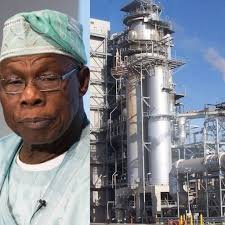
Former Nigerian President Olusegun Obasanjo has reiterated his long-standing position that the country’s state-owned refineries will never function effectively, despite ongoing efforts to rehabilitate them.
Speaking during a televised interview, Obasanjo argued that structural inefficiencies, poor maintenance, and corruption have made the facilities unviable over time.
He explained that during his time in office, attempts were made to involve private operators, including approaching Shell to manage the refineries. However, the company declined, citing limited profitability in downstream operations, the small scale of Nigeria’s refineries, and concerns about maintenance and governance issues.
Obasanjo noted that the refineries, with capacities ranging between 60,000 and 100,000 barrels per day, fall short of global standards, where modern facilities typically operate at significantly higher capacities.
He further revealed that a deal was once reached with Aliko Dangote to acquire a majority stake in two refineries for $750 million.
However, the agreement was later reversed under the administration of former President Umaru Musa Yar’Adua following pressure from the Nigerian National Petroleum Corporation.
According to Obasanjo, subsequent government spending on refinery rehabilitation—estimated at around $16 billion—has yielded little value, especially when compared to the cost of building the privately owned Dangote refinery.
Meanwhile, the Nigerian National Petroleum Company Limited is currently seeking technical partners to manage the Port Harcourt, Warri, and Kaduna refineries, with a target to finalise the process by mid-2026.
Industry stakeholders, including Dangote, have similarly expressed doubts about the long-term viability of the refineries, citing operational inefficiencies and global competitiveness challenges.
The development underscores ongoing concerns about Nigeria’s refining capacity and the broader push for sustainable, market-driven solutions in the country’s oil and gas sector.